Before an apartment building can become more energy-efficient, operators must understand exactly where and when resources are being consumed. Smart energy monitoring provides the critical data layer that separates assumptions from actual operational facts.
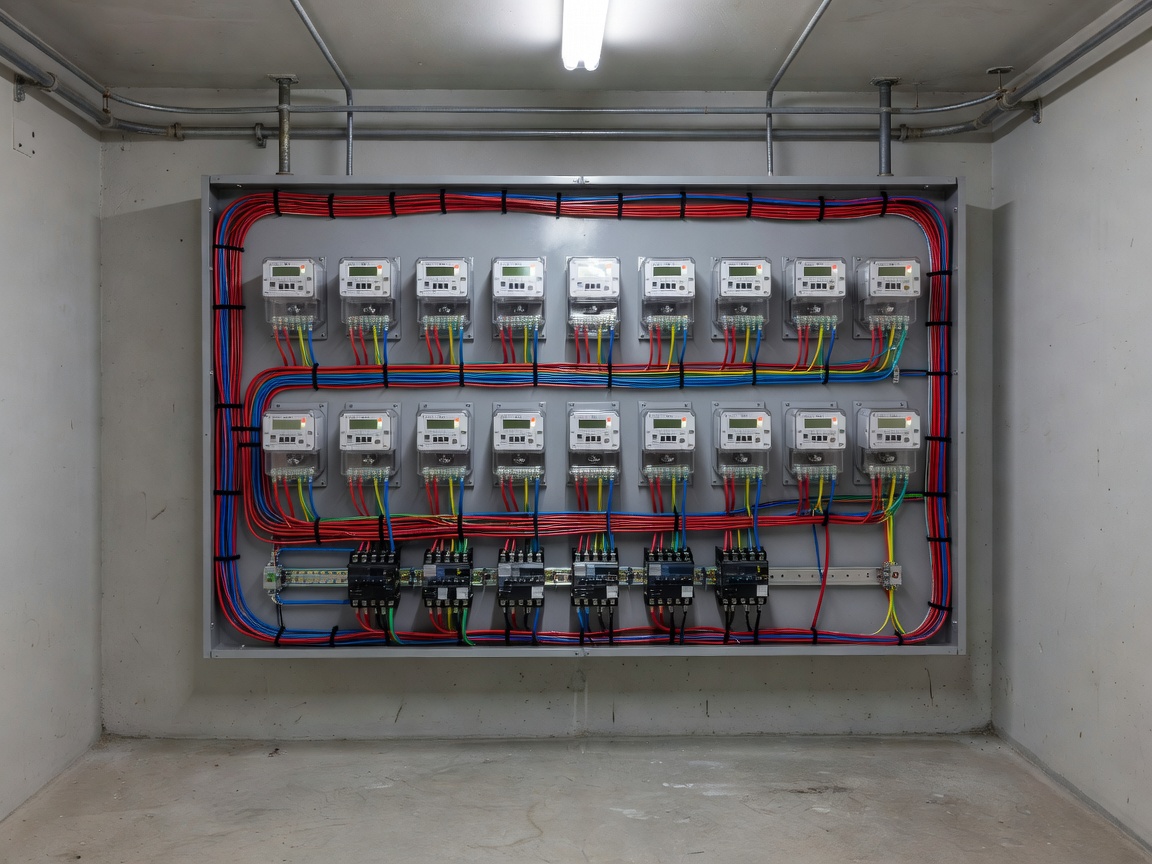
Metering vs. Sub-metering
Most buildings have a master utility meter tracking overall consumption. However, this macro-level view is insufficient for diagnostic purposes. Sub-metering involves placing measurement devices on specific circuits, floors, or mechanical systems—such as central chiller plants, common-area lighting grids, or domestic water pumps.
By granularly tracking consumption, managers can identify abnormal usage patterns, such as a heating system running aggressively against a cooling unit, or common-area electricity spiking during daylight hours.
Data Visualization and Usage Patterns
Raw data is rarely actionable on its own. Smart monitoring relies on data visualization dashboards that translate kilowatts and therms into understandable trends. Recognizing the building's "base load"—the minimum energy required to run the building when activity is lowest—is essential for spotting phantom power drains or scheduling errors.
Measurement vs. Reduction
It is crucial to note the difference between measuring energy and actually reducing consumption. A monitoring dashboard does not save energy; it merely highlights opportunities. Reduction requires subsequent action, such as adjusting building schedules, retrofitting inefficient equipment, or addressing insulation deficits.
Resident Communication and Data Limitations
While monitoring common areas is standard practice, extending monitoring into individual apartments introduces complexity regarding resident privacy and data handling. Communicating the purpose of energy monitoring to residents is vital. Sharing high-level, anonymized whole-building data can sometimes encourage a culture of conservation without infringing on personal privacy.
Additionally, recognize data limitations. Sensors can drift out of calibration, and network outages can cause data gaps. Energy monitoring systems require their own maintenance to ensure the data informing your efficiency planning remains accurate.
What to Know for Implementation
Integrating new monitoring equipment into legacy electrical panels can be structurally challenging and may require planned power outages. Building operators must balance the cost of hardware and installation against the qualitative value of the resulting data.
Energy Monitoring Checklist
- Identify high-draw systems (HVAC, elevators, pumps) for priority sub-metering.
- Establish a baseline usage pattern before implementing changes.
- Ensure data visualization tools are accessible to the staff members who actually control building schedules.
- Schedule routine calibration checks for flow meters and electrical current transformers (CTs).
- Develop clear privacy policies regarding the collection of any resident-specific utility data.
Good For
Building owners looking to identify operational waste, property managers forecasting utility budgets, and technical teams troubleshooting mechanical inefficiencies.